Frequently asked questions
-
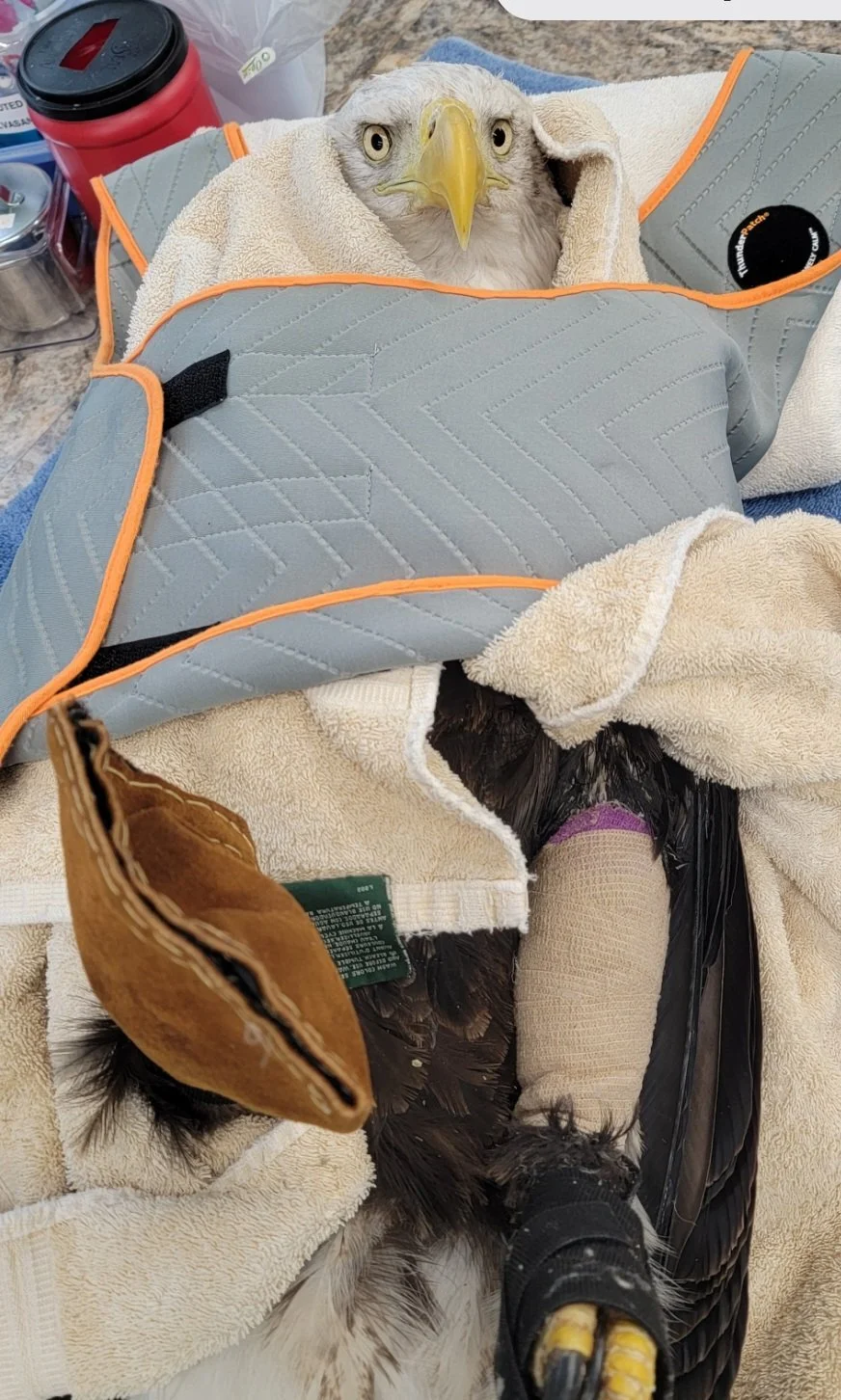
Yes, if the bird is a Bald Eagle, Hawk, or Owl. Please call us for instructions before doing anything else.
Call: 715-781-2595 (Kim) or 715-205-4266 (Dennis)
If possible, keep eyes on the bird while you call so you can tell us exactly what you’re seeing.
-
Our physical address is N4685 Chicago Junction Rd, Spooner, WI 54801, approximately one mile south of Spooner off Highway 253.
We admit birds by appointment only. Please call ahead so we can ensure the hospital is open and prepared when you arrive.Getting started is simple. Reach out through our contact form or schedule a call—we’ll walk you through the next steps and answer any questions along the way.
-
Winged Freedom only admits raptors and cannot assist with other wildlife species. Please consult the Wisconsin DNR wildlife rehabilitator map to locate a licensed rehabilitator who accepts the species you have found. While they may not be nearby, cooperative transportation is sometimes possible.
-
Please call us for guidance before intervening. If possible, take a photo to share with us while we discuss the situation.
Many young raptors leave the nest before they are able to fly, and their parents are often nearby continuing to care for them. We can help you determine whether the bird truly needs assistance or should be left where it is.
-
Yes—if it is safe to do so and you are mindful of traffic. You may gently wrap the bird in a blanket or jacket and move it out of harm’s way.
Raptors defend themselves with their feet and sharp talons, so wear heavy gloves if available and avoid contact with the feet. A cardboard box or plastic tote can serve as a temporary container to keep the bird quiet while we arrange transport to the hospital.
-
Please call us for advice. When a raptor is sick or injured, it is common to see it repeatedly in an area where it is not normally observed.
If the bird is small, we may ask you to place it in a box and help arrange transport. If it is a larger raptor, such as an eagle, you will likely need assistance from our team. Please continue to monitor the bird so we can locate it if it moves.
-
You are welcome to call or text Winged Freedom at 715-781-2595 with your name, the species, and the date the bird was admitted. She will respond with an update as soon as she is able.
-
Raptors are federally protected alive or deceased. We generally do not accept deceased birds due to disease risk and recommend contacting your local DNR office for guidance.
If the bird is a Bald Eagle, it must be sent to the National Eagle Repository in Colorado for processing.
-
Please call to make arrangements for donation drop-off.
We gratefully accept:
Whole fish
Bow-shot venison
Beaver carcasses
Clean cardboard (especially during summer months)
Monetary donations may be dropped off, mailed to Winged Freedom Raptor Hospital, PO Box 493, Spooner, WI 54801, or made through this website or PayPal. Please call with questions about other items you are considering donating.
-
By prearrangement, we offer tours for donors that allow visitors to see areas of the hospital we are able to share. Because our patients are wild animals and easily stressed, we do not allow direct viewing.
Our enclosures are monitored by cameras, and portions of the working hospital can be viewed. From May through September, we are extremely busy but will do our best to accommodate tour requests.
-
Yes. Dr. Kim offers an educational presentation that provides a behind-the-scenes look at a busy raptor hospital. The program runs approximately 45 minutes, followed by 15 minutes for questions.
Audience members are often surprised by the advanced medical and surgical care involved in treating raptors. Please call for scheduling details. Our Bald Eagle ambassador is not yet ready to participate in presentations.
-
Winged Freedom offers two types of volunteer opportunities:
Hospital Volunteers: commit to working the same morning each week and assist with daily patient care. Duties include meal preparation, cleaning enclosures, laundry, assisting with procedures, and general hospital upkeep. Extensive training is required, and weekly commitment is expected.
Rescue and transport: volunteers attend a mandatory training session and provide their own basic equipment, such as gloves and totes. When a rescue call occurs in their area, they respond to safely capture, contain, and transport the bird to our hospital. Because we serve all of northwest Wisconsin, we rely on volunteers throughout the region.
If you are interested in volunteering in either role, please call us to learn more!